





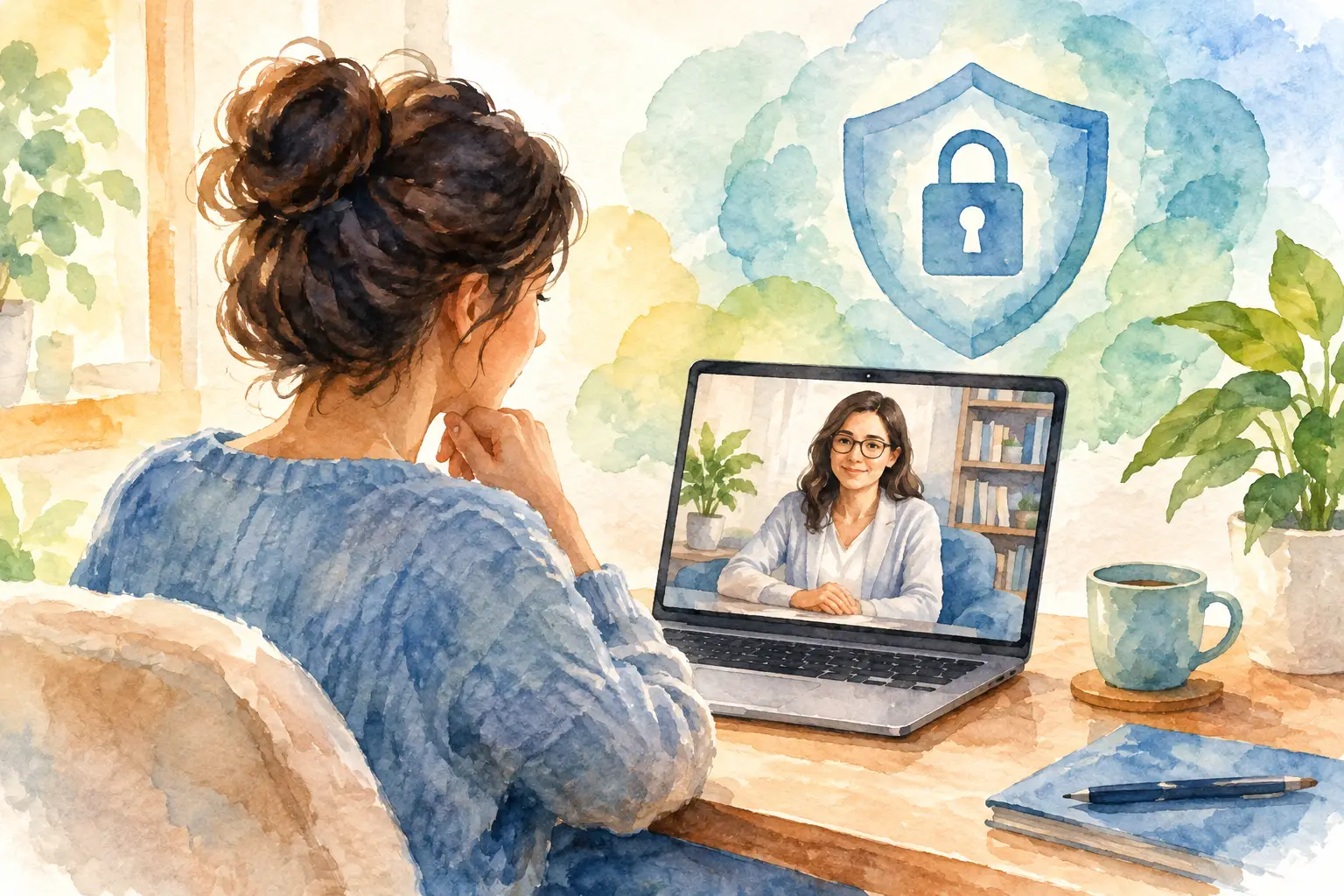
Starting psychiatric care can bring relief and uncertainty at the same time. You may be ready to discuss anxiety that is affecting work, ADHD symptoms that are making daily tasks harder, or changes in mood during menopause, yet still wonder who might have access to what you share. So, is online psychiatry confidential? In most cases, yes. Virtual psychiatric care is held to the same privacy standards as in-person care, but confidentiality also depends on the technology, setting, and communication practices involved.
Is online psychiatry confidential under HIPAA?
For most psychiatric practices in the United States, online visits are protected by the Health Insurance Portability and Accountability Act, commonly called HIPAA. HIPAA sets rules for how covered health care providers and their business partners may use, store, and share protected health information.
Protected health information can include your diagnosis, treatment plan, medications, appointment history, health insurance details, and the personal concerns you discuss in a session. A psychiatrist or psychiatric mental health provider cannot casually share this information with an employer, partner, family member, or friend. Your care is private even when it takes place through a screen.
A reputable telepsychiatry practice should use a platform designed for health care communication and have policies for safeguarding patient records. This generally means encrypted video technology, controlled access to your patient portal, and electronic health record systems with protections in place. Your provider should also explain how to contact the practice securely and how your information is handled.
HIPAA does not mean that information is never shared. It means there are clear limits, safeguards, and patient rights around sharing it. Health information may be used for treatment, payment, and health care operations. For example, a provider may need to coordinate with your primary care clinician, send a prescription to your pharmacy, or submit necessary information to your insurance plan. When possible and appropriate, this is done with the minimum information needed for the purpose.
When confidentiality has limits
Psychiatric confidentiality is strong, but it is not absolute. These limits apply whether you meet in an office or online. A provider is legally and ethically required to take action in certain situations, particularly when there is a serious and immediate safety concern.
Your provider may need to share information if there is an imminent risk that you will harm yourself or someone else, if abuse or neglect of a child, older adult, or vulnerable adult is suspected, or if records are required by a valid court order. Requirements can vary somewhat by state and by the circumstances involved. A clinician may also consult with other members of a treatment team when that consultation supports your care and is permitted under privacy rules.
These situations are not a punishment for being honest. They are safety responsibilities. If you are worried about what might happen if you disclose thoughts of self-harm, ask your provider directly how they approach safety planning and when they may need to involve additional support. A thoughtful psychiatric conversation makes room for risk, context, and your dignity rather than treating every difficult thought as an emergency.
The platform matters, but so does your environment
A secure telehealth system protects the connection between you and your provider. It cannot fully control what happens around you at home, at work, or wherever you join the appointment. For many people, this is the most practical part of protecting privacy during online psychiatry.
If possible, choose a private room where others cannot easily hear you. Headphones can reduce the chance that someone nearby hears your provider's voice. If you live with family, roommates, or children, you might use a parked car, a quiet room with a closed door, or another private location with a dependable internet connection. Avoid public places, shared workspaces, and open waiting areas where conversations can be overheard.
Your device deserves attention, too. Use a personal device when you can, protect it with a passcode or biometric lock, and avoid saving passwords on a computer that others regularly use. Log out of the patient portal after a visit if you share a device. Keep operating systems and browsers updated, since updates often include security protections.
A private setting is not always available. That does not mean you have to postpone care. Tell your provider at the start of the session if you have limited privacy. You may be able to use headphones, communicate carefully about sensitive topics, or plan a follow-up when you have more space. Your clinician can work with you on what is realistic without judgment.
Be thoughtful about email, text, and voicemail
Many practices use reminders, portal messages, calls, or text messages for scheduling and administrative communication. These methods may be convenient, but they are not all equally private. Standard email and text messages can be viewed by someone with access to your phone, email account, notifications, or phone bill.
Ask how the practice communicates and what choices you have. You may be able to request discreet voicemail messages, turn off lock-screen previews, or use a secure patient portal for nonurgent questions. Do not send urgent safety concerns through a portal, email, or routine text message. If you are in immediate danger or believe you may act on thoughts of harming yourself or someone else, call 911 or 988, or go to the nearest emergency department.
What insurance may reveal
One privacy concern that surprises some patients is the explanation of benefits, often called an EOB. If you use insurance, the policyholder may receive an EOB showing that services were provided, the date of service, the provider or practice name, and billing details. The level of detail varies by insurer and plan.
An EOB is not a therapy or psychiatry note. It generally does not contain a full account of what you said in your appointment. Still, it can disclose that you received mental health care, which may matter if you are covered under a spouse's, parent's, or other family member's plan.
If this is a concern, call the number on the back of your insurance card and ask about confidential communications or alternate mailing options. Depending on the plan and your circumstances, you may also want to discuss self-pay options with the practice before scheduling. There can be financial trade-offs, so it helps to understand the costs and privacy implications clearly rather than making assumptions.
Questions worth asking before your first visit
You do not need to become a technology expert before seeking help. A few direct questions can help you feel more settled about care. Ask whether the practice uses a HIPAA-compliant telehealth platform, how records are stored, who can access your information, and how you can communicate securely between appointments.
You can also ask how the practice handles releases of information. In most situations, your provider needs your written permission before sharing records with another clinician, a family member, an attorney, or another outside party. You may be able to limit what is shared and with whom. If you want a partner or relative involved in your care, say so clearly. If you do not, that boundary matters as well.
It is reasonable to ask about emergency procedures for virtual visits, especially if you have a history of severe depression, panic, trauma, or suicidal thoughts. Telepsychiatry providers typically need your current location and an emergency contact at the beginning of care. This is not routine surveillance. It helps them respond if an urgent safety situation arises during a session when they are not physically in the room.
Privacy supports honest care
Psychiatric treatment works best when you can speak openly about what is happening in your life: the thoughts you have not said out loud, the strain in a relationship, the exhaustion behind a high-functioning exterior, or the frustration of trying to manage symptoms alone. Confidentiality creates the conditions for that honesty.
Online psychiatry is not risk-free, just as paper files and office conversations are not risk-free. It is a form of care with meaningful privacy protections and a few practical responsibilities. Choosing a qualified provider, using secure technology, and creating as private a space as possible can make virtual care feel both accessible and appropriately protected.
If privacy concerns have kept you from asking for support, let them be part of the first conversation. A compassionate psychiatric practice should be prepared to explain its safeguards, respect your questions, and help you find a care arrangement that feels safe enough to begin.